Starship Flight 15 is scheduled to turn a routine-looking orbital pass into a highly visible test of controlled return and recovery. After its launch window opens on November 13, 2026, at 4:45 p.m. Central Time, the vehicle is planned to remain in orbit for more than 22 hours. On November 14, it is expected to begin a return toward Starbase, Texas, with a first planned attempt to catch the returning vehicle at the launch tower. Whether observers see anything will depend on the exact path, daylight, weather and their viewing location.
What is planned for Flight 15
The Starship upper stage is planned to orbit at approximately 275 kilometers above Earth. That is a relatively low orbit, and the vehicle’s time there is expected to last more than 22 hours before the return sequence begins. The event is therefore not simply a launch or a conventional landing. It combines an orbital mission, atmospheric reentry and an attempt to guide the vehicle back toward its launch site.
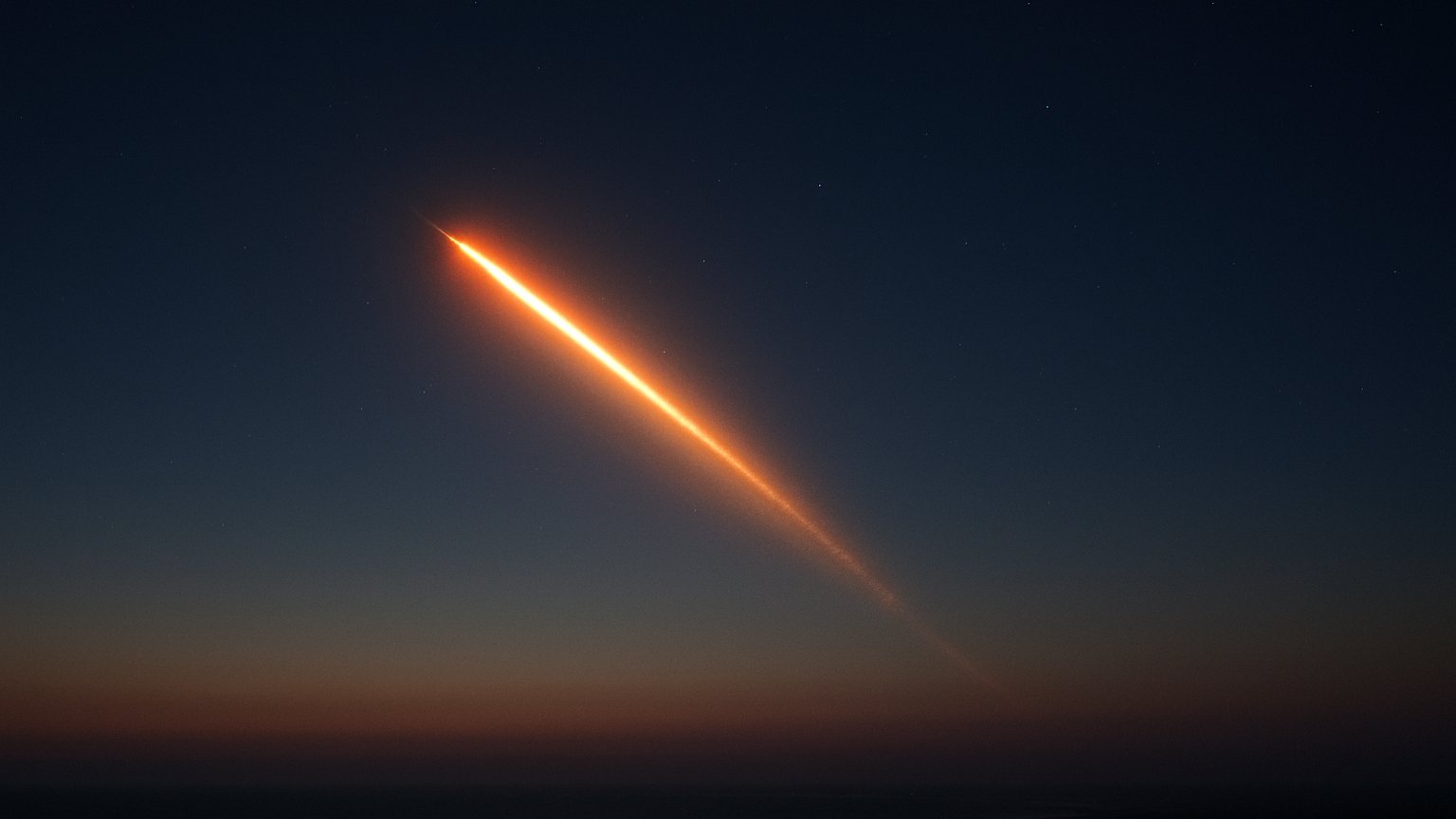
The return-to-launch-site maneuver is planned for November 14, 2026. During this phase, the vehicle may become visible from the ground as a bright, rapidly moving object. Its apparent motion would result from the spacecraft traveling at orbital and reentry speeds while crossing the sky or descending through the atmosphere. However, the schedule alone does not guarantee a visible pass from any particular location.
Why reentry can produce a bright sight
As a spacecraft encounters the upper atmosphere, it compresses and heats the air in front of it. The surrounding gas can become extremely hot and partially ionized, producing a luminous region around the vehicle. This is why an object returning from orbit can appear brighter and more dramatic than an ordinary aircraft or satellite.
The appearance may change quickly. Depending on the viewing angle, an observer could see a bright point, a glowing streak or a changing trail. The vehicle’s brightness, visibility and apparent duration would be influenced by its altitude, orientation, reentry track and the amount of daylight. These details also mean that two observers in different places might have very different views of the same return.
The route and the proposed tower catch
The reentry and return path is expected to cross the Pacific and parts of Mexico and southern Texas before the planned approach to Starbase. This broad path is important because visibility is not limited to the launch site itself. At the same time, only locations under suitable portions of the trajectory could see the vehicle, and the line of sight could be affected by the horizon, clouds or daylight.
The planned tower catch would be a major recovery test. Instead of ending the flight with a conventional ground landing, the returning vehicle would be guided toward the launch tower for capture. The attempt is notable because it would represent the first planned full recovery of an orbital launch system through this kind of return and catch operation. It remains an attempt, not a guaranteed outcome, and the final sequence depends on the vehicle completing each earlier part of the mission.
What observers should expect
The most important limitation for skywatchers is uncertainty about visibility. The reentry track, local weather, daylight and viewing location will all matter. Even if the vehicle is above the horizon, clouds or bright daytime skies could hide it. Conversely, a clear view in the right part of the path could reveal a brief, fast-moving phenomenon.
This makes Flight 15 both a spaceflight milestone and a possible atmospheric spectacle. The event brings together orbital mechanics, the physics of reentry and a demanding recovery maneuver at Starbase. If conditions align, observers across parts of the route may see the spacecraft’s return as a short-lived bright object. The planned tower catch, however, is the central objective: a controlled attempt to bring an orbital vehicle back to its launch site for recovery.