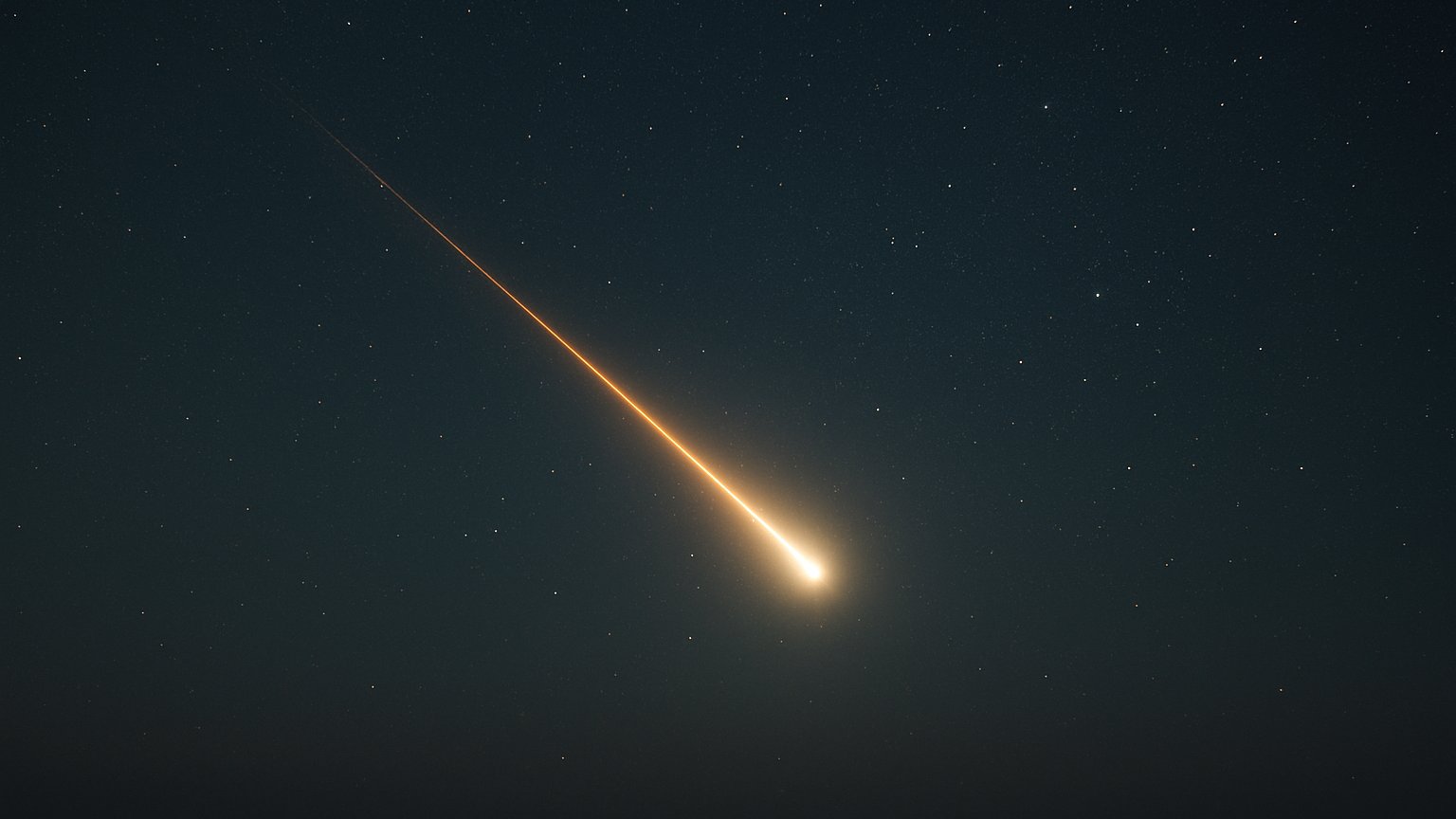
The Southern Taurid meteor shower reaches its annual fireball-swarm peak on November 5, 2026. This is not a meteor shower known for producing a dense stream of streaks. Instead, the Taurids are a slower, more selective display: observers may see only a modest number of meteors, but some can be unusually bright and leave trails that remain visible for a long time.
What to expect from the Southern Taurids
Under ideal conditions, the Southern Taurids are expected to produce roughly 5 to 10 meteors per hour around the peak. That figure is an idealized rate, so actual observing numbers can be lower depending on cloud cover, light pollution, the clarity of the horizon and how much of the sky is visible.
The most notable feature of the shower is its occasional fireballs. A fireball is an exceptionally bright meteor created when a larger fragment of space debris enters Earth’s atmosphere and heats the surrounding air. Taurid fireballs can be slow-moving compared with meteors from many other prominent showers. Their paths may therefore appear more deliberate and extended, making them especially memorable when one crosses a dark sky.
The Southern Taurids are associated with debris from Comet 2P/Encke. As Earth passes through this dispersed material, individual particles encounter the atmosphere at high speed. Most are small, but the stream can occasionally produce the brighter events for which the Taurids are known.
Why Taurid meteors can look slow and long-lasting
Southern Taurid meteors enter the atmosphere at about 27 to 29 kilometers per second. That is slower than the entry speeds associated with many prominent meteor showers. The apparent motion of a meteor depends on several factors, including its speed, its angle across the sky and the observer’s perspective. Taurid meteors’ relatively low atmospheric speed can contribute to a slower-looking passage and longer visible trails.
When a meteoroid encounters the atmosphere, compression and friction heat both the object and the surrounding gases. The glowing streak is produced by this energized material along the particle’s path. A persistent trail can remain after the main flash, as the disturbed and glowing gases gradually fade. These trails are not guaranteed, but they are part of the shower’s reputation for dramatic individual meteors.
The Southern Taurids should not be confused with a high-rate meteor storm. Their appeal lies in contrast: fewer meteors, with a greater chance that one of the visible events will be bright enough to stand out clearly.
When and where to look
The shower is visible from both hemispheres, although the height of its radiant and the quality of the view will vary with location. The radiant—the apparent point in the sky from which the meteors seem to emerge—is in Taurus. As Taurus rises higher, more of the shower’s activity can become visible above the horizon.
The best general viewing period is after midnight and before dawn, when Taurus is high in the sky. November 5 also coincides with a waning crescent Moon, creating relatively dark conditions for meteor watching. Moonlight is therefore less likely to overwhelm the fainter meteors than it would be during a brighter lunar phase, although local artificial light can still have a major effect.
For the best chance of seeing a fireball, choose the darkest practical location, allow your eyes time to adjust and watch a broad area of sky rather than focusing only on Taurus. Meteors may appear far from the radiant, and patience is important during a shower with modest activity.
A shower defined by memorable individual events
The Southern Taurids are interesting because they reward quality over quantity. A night may pass with only a few visible meteors, yet one bright, slow-moving fireball with a lasting trail can become the defining sight of the entire observation session. The November 5 peak offers an opportunity to look for exactly that combination: relatively dark skies, a visible Taurid radiant and the possibility of an unusually bright atmospheric flash.
As with any meteor-shower observation, forecasts of hourly activity describe favorable conditions rather than a guarantee for every location. Weather, sky transparency, surrounding lights and the radiant’s altitude all shape what an observer actually sees. Even so, the Southern Taurids remain a worthwhile target for anyone interested in the quieter but more dramatic side of meteor activity.