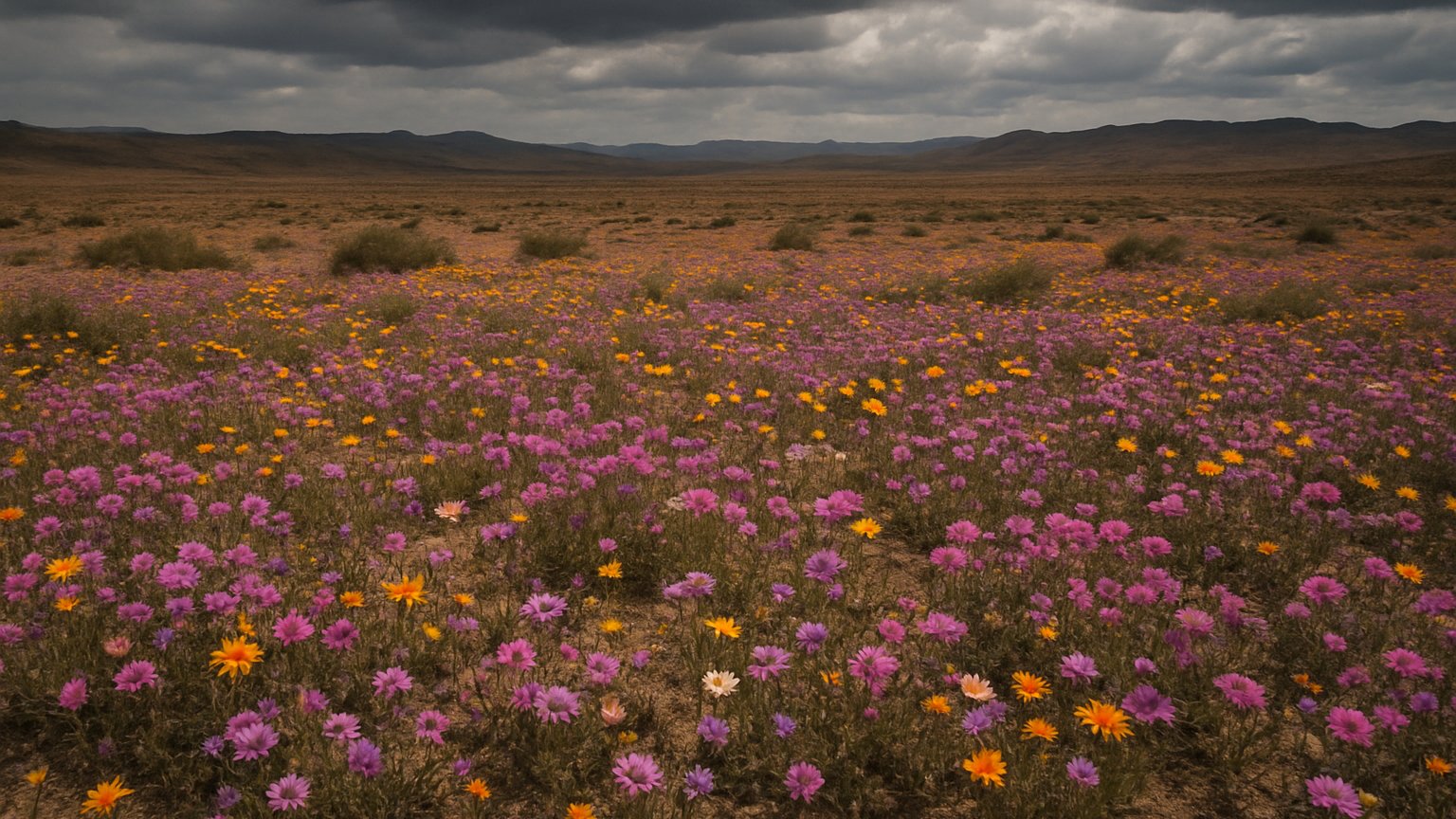
On November 13, 2026, the Atacama Desert in Chile is showing an extraordinary change. After an unusually wet winter associated with a powerful El Niño, millions of flowers are transforming parts of one of the driest places on Earth into a broad, colorful landscape. The bloom is especially notable around the Copiapó and Huasco areas, where a normally sparse desert is expected to remain in flower through November.
A vast flowering landscape
The flowering area is estimated at approximately 17,000 square kilometers, making this far more than a small patch of seasonal color. More than 200 native plant species may appear during the event, creating a changing mix of flowers across the desert. The exact composition of the landscape can vary from one area to another, depending on which plants respond to the rain and where moisture reached the ground.
The visual contrast is the defining feature of the 2026 bloom. The Atacama is known for its extreme dryness, yet large sections are now covered by vegetation and flowers. This contrast makes the event valuable not only for photography and tourism, but also for observing how desert ecosystems respond when an unusual amount of water becomes available.
The bloom is expected to continue through November 2026. It is also expected to be among the most extensive flowering events in the region since the 1990s, adding to its rarity and scientific interest.
How dormant seeds and bulbs respond
Desert plants can survive difficult conditions by remaining inactive for long periods. Seeds and underground bulbs may stay dormant until environmental conditions become favorable. In this event, some seeds and bulbs had remained dormant for decades before germinating.
Rain is the essential trigger. Once enough moisture reaches the soil, dormant plant structures can begin the processes that lead to roots, stems, leaves and flowers. A single wet season does not make the desert permanently wetter; instead, it creates a temporary window in which plants that have endured long dry intervals can grow and reproduce.
The result is not simply a sudden appearance of color. It is a visible expression of biological timing: plants respond when water, temperature and seasonal conditions allow them to become active. Different native species may emerge at different rates, helping produce a varied flowering landscape rather than one uniform carpet.
The role of El Niño
The 2026 event was enabled by unusually heavy winter rainfall associated with a strong El Niño. El Niño is a large-scale climate pattern that changes oceanic and atmospheric conditions and can alter rainfall patterns in different parts of the world. In this case, the rainfall provided the unusual moisture needed for the Atacama’s dormant plant life to awaken.
It is important to distinguish the climate driver from the local spectacle. El Niño did not create new species or permanently transform the desert. Instead, the event supplied an exceptional environmental opportunity for native plants already adapted to the region’s harsh conditions. The resulting bloom is therefore both temporary and highly significant: temporary because the flowers depend on limited moisture, and significant because such favorable conditions are uncommon.
Why this bloom is unusual
The Atacama flowering event combines scale, diversity and long dormancy. An estimated 17,000 square kilometers are involved, more than 200 native species may be visible, and some plants emerged after waiting for decades. Together, these details explain why the 2026 bloom is expected to rank among the most extensive since the 1990s.
For observers, the event offers an unusually clear view of a desert ecosystem in an active phase. For scientists, it demonstrates how native plants can persist through prolonged unfavorable conditions and respond rapidly when rain returns. And for anyone seeing images from the Copiapó and Huasco areas, the landscape is a reminder that even one of the world’s driest deserts can experience a dramatic, short-lived flowering season.