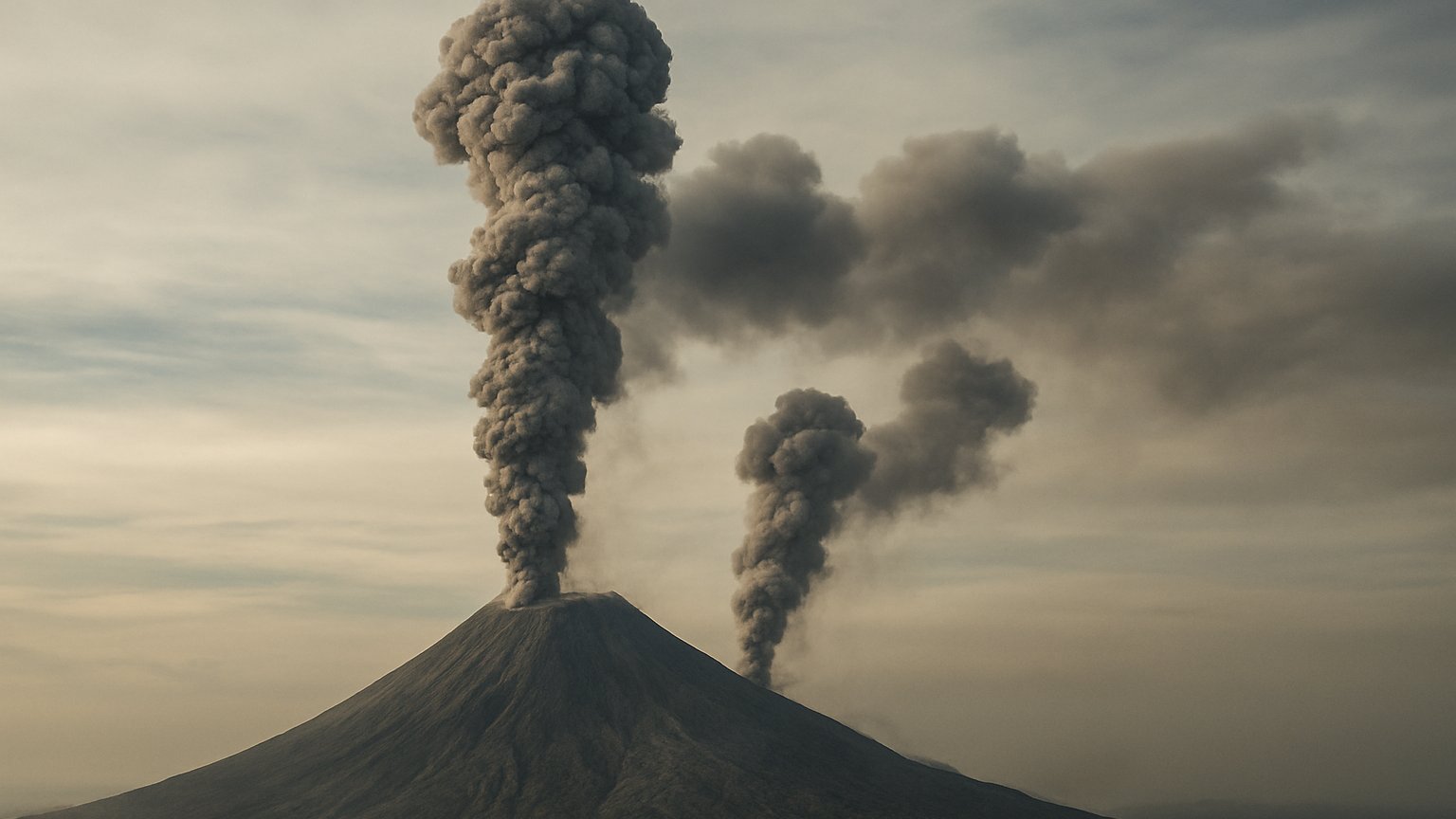
Kanlaon Volcano on Negros Island, Philippines, produced three fresh ash-emission events during the 24-hour period reported on November 16, 2026. The gray plumes rose as high as 1,000 meters above the summit and drifted toward the west and southwest, creating a striking atmospheric display while also reflecting continuing volcanic activity beneath the surface.
Three emissions recorded over 24 hours
The reported activity consisted of three separate ash emissions. Individual events lasted approximately 11 to 71 minutes, showing that the ash release was episodic rather than continuous throughout the observation period. Although the plumes were visually prominent, the available report does not describe them as a large explosive eruption. The event is best understood as a series of volcanic ash emissions from an active volcano.
The direction of the plume movement was an important part of the observation. Winds carried the ash westward and southwestward from the summit. Once released, volcanic ash can be transported away from its source by the surrounding atmosphere, so its path depends on wind direction and conditions at different heights.
How volcanic ash reaches the atmosphere
Volcanic ash is made of very small fragments of volcanic material, including pulverized rock and other particles produced when gases and magma move through a volcanic system. When an emission pushes these particles above the summit, they become part of the lower atmosphere. A plume can appear gray or brown because it contains a dense mixture of fine particles.
The height of a volcanic plume depends on several factors, including the strength of the emission, the amount of material released, the temperature of the gases and the surrounding atmospheric conditions. At Kanlaon, the reported plumes reached up to 1,000 meters above the summit. That measurement describes the height above the volcano’s summit, not the altitude above sea level.
As a plume moves downwind, it can spread and become less concentrated. Rain, gravity and turbulence gradually remove or redistribute ash particles. Even when the visible plume fades, monitoring remains important because volcanic activity can change over time.
Earthquakes, gas and inflation add context
Monitoring during the same reporting period detected eight volcanic earthquakes. These signals are one of the ways volcanologists track movement and pressure within an active volcanic system. Earthquakes alone do not determine exactly what will happen next, but they provide important information when assessed alongside other observations.
The monitoring picture also included strong sulfur-dioxide emissions and ongoing edifice inflation. Sulfur dioxide is a volcanic gas that can rise from magma or heated volcanic fluids. Edifice inflation means that part of the volcano is expanding, which may indicate changes in pressure or the movement of material below the surface. Together with the ash emissions and earthquakes, these observations explain why continued surveillance is significant.
Alert Level 2 remained in effect. The alert level is an official indication of the volcano’s monitored status and does not, by itself, predict a specific future event. The reported observations show an active system requiring attention, while the available information does not establish that a larger eruption is imminent.
A visible reminder of an active volcano
Kanlaon’s ash plumes are both a weather-like sky phenomenon and a sign of geological activity. Their appearance was shaped by the interaction between material released from the volcano and winds in the lower atmosphere. The three events also demonstrate why volcanic monitoring combines visual observations with measurements of earthquakes, gases and changes in the shape of the volcanic edifice.
For communities and observers on Negros Island, the westward and southwestward drift provided a clear indication of how the atmosphere was carrying the ash away from the summit. The continuing Alert Level 2 status and the recorded monitoring signals make the event scientifically important even though the reported emissions were limited in duration.